
Lithium Metal
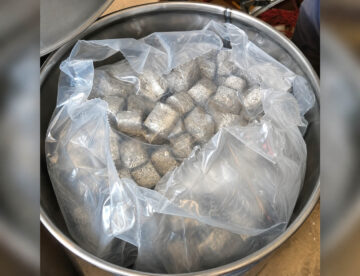
We offer lithium metal from stock at competitive prices with delivery throughout Russia.
Quality Parameters According to TU 1780-065-04707044-2012
| Parameter | Value by Analysis |
| Physical state | Solid |
| Lithium content, % | 99.836 |
| Iron content, % | 0.005 |
| Aluminium content, % | 0.003 |
| Calcium content, % | 0.03 |
| Sodium content, % | 0.04 |
| Potassium content, % | 0.005 |
| Magnesium content, % | 0.02 |
| Manganese content, % | 0.001 |
| Silicon oxide content, % | 0.01 |
| Nitrogen content, % | 0.05 |
| Hazard class according to TU | IV |
Description
Lithium Metal
Lithium (Li) is a soft, silvery-white alkali metal and the lightest of all metals. It tarnishes quickly in air, reacting with oxygen, nitrogen and moisture. It reacts with water, releasing hydrogen, so it is supplied and stored only in sealed packaging.
Lithium briquettes are made by briquetting offcuts and residues of LE-1 grade lithium metal according to GOST 8774-75.
Packaging: Hermetically sealed 40 g briquettes, packed in drums weighing 26–30 kg.
Storage conditions: Store in sealed packaging in a dry, well-ventilated area at temperatures not exceeding 40 °C, away from water and moisture.
Dangerous goods: UN 1415, hazard class 4.3 (substances which emit flammable gases in contact with water). Transportation must comply with applicable dangerous goods regulations.
| Chemical formula | Li |
| CAS No | 7439-93-2 |
| Appearance | Soft silvery-white metal |
| Density | 0.534 g/cm³ |
| Melting point | 180.5 °C |
| Boiling point | 1342 °C |
| Solubility in water | Insoluble; reacts, releasing hydrogen |
Applications
Lithium metal is used:
- In the production of lithium power sources and anodes for lithium-metal batteries.
- In lightweight aluminium-lithium and magnesium-lithium alloys for aerospace engineering.
- As a raw material for organolithium compounds used in the manufacture of polymers and pharmaceutical ingredients.
- To produce lithium hydride, lithium aluminium hydride and other lithium compounds.
- As a reducing agent in organic synthesis.
- In metallurgy as a deoxidizer and degasser in melting copper and copper alloys.
- In lead-based bearing alloys and special solders.
- As a reagent in laboratory practice and scientific research.
